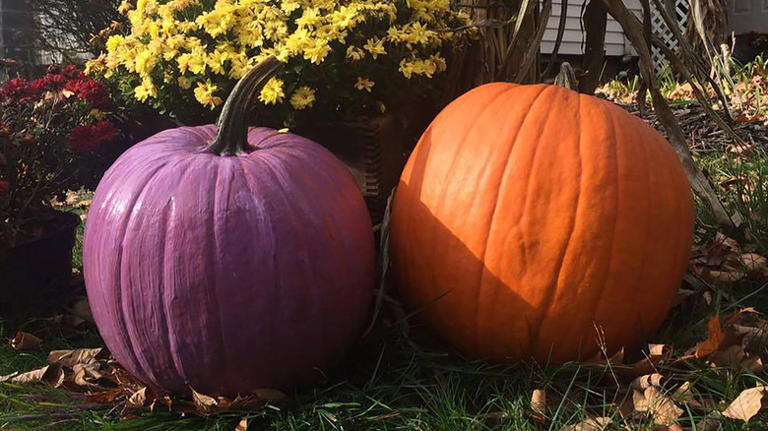
Pumpkins and jack-o’-lanterns, time-honored traditions for fall and Halloween décor, usually have a familiar orange hue. But more and more, these decorative gourds are taking on out of the ordinary colors to raise awareness and foster conversations about health concerns. Purple is one of the chosen colors that stands out among all the orange, and it’s used to encourage epilepsy mindfulness.
If you or someone in your family has epilepsy — a neurological disorder creating flows of electrical activity in the brain that trigger seizures — placing a purple pumpkin on your porch can alert others that may want to learn more about your experiences or exchange information with you. Even if you or someone in your family doesn’t have epilepsy, you can still paint a pumpkin purple to raise awareness. The custom of using purple pumpkins in this way came about in 2012 as part of the Purple Pumpkin Project with the Epilepsy Foundation, which was announced on a popular Facebook page.
The first person to paint a pumpkin purple was Ron Lamontagne of Connecticut who wanted to make others aware of the challenges his son faced as a youngster with epilepsy. After he shared his purple pumpkin, photos of other similarly-painted pumpkins placed on porches in all areas of the United States were soon being posted on the page, with many being decorated by children or their families. Some are plain purple pumpkins while others are given personal flourishes like eyes or sparkling glitter.

 Vegan Book Blogger